Introduction
When I decided to do the 24-hour Digital Detox over Thanksgiving Break, I thought it would be a simple break from screens. I imagined a quiet day, maybe even a little boring. But it turned into something much more vulnerable, a day of meeting myself again without the buffering presence of my phone. Newport’s (2019) observation kept echoing in my mind as I began: that it’s now entirely possible to “banish solitude from your life”, and that we’ve reached a point where people might actually forget what solitude feels like altogether. Part of me realized I already had. This detox became less about my devices and more about remembering a state of being I had lost touch with.
Preparing for the Detox: Building a Space for Stillness
I started by telling my friends what I was doing. It felt strange to “announce” something as ordinary as being unreachable for a day, and that strangeness alone made me aware of how embedded my phone is in my social life. As per the rules, I was completely going off all my devices: no phone, laptop, iPad, or TV. But I didn’t want the day to feel like deprivation. I wanted it to feel gentle. So the night before, I created small pockets of support for myself: paints I hadn’t touched in ages, and a book I had been meaning to finish for ages. Laying them out felt almost ceremonial, like preparing to meet parts of myself that I had left on hold for a while amidst all the rush of life. My intentions were clear. As Vialle et al. (2023) describe, I wanted to practice resisting temptations, almost like putting myself on a digital diet and, at the same time, exploring the ongoing tension between the self I am and the ideal self I’m always chasing. In that moment, my current self was someone easily distracted by devices, using them for self-soothing and stimulation. And, my ideal self was someone more resilient, present, and grounded. Preparing my space and preparing to be honest with myself was my first act of resistance.
When the detox began, the first thing I noticed was how strangely time behaved. It slowed down. Not gracefully at first, but awkwardly, like the brakes of a speeding car had suddenly been hit. Moments stretched out into long, empty spaces. Without the usual rush of notifications to structure the day, hours seemed to widen until I didn’t quite know what to do with them. That stretch of time created a kind of push and pull within me. The quiet felt expansive and empty. I kept reaching for my phone out of habit. I didn’t realize how reflexive and physical those impulses were until the device wasn’t there. There were moments when I felt restless, almost irritated by the stillness. I realized that day how much my devices were integrated into my life. To such an extent that their presence seemed almost invisible, but so prevalent that it had been helping me escape difficult feelings so seamlessly. As Price (2025) describes, sometimes what we’re chasing isn’t pleasure but the relief of escaping boredom or anxiety. That was what I had been using my phone for. To soothe the discomfort I didn’t even notice I was feeling. But as the hours passed, the emptiness softened.
I spent the day indoors with friends in Philly, and without our phones constantly pulling us into separate worlds, our time together felt fuller. We brewed chai, cooked, and talked about everything, and spent time in silence. Conversations unfolded in long, looping arcs. Without screens, they didn’t have abrupt endings. They just drifted, gently, like they had room to breathe.
Solitude also found me in a way I didn’t expect. I journaled, rested, stared at the ceiling for longer than I ever admit to doing. And in that quiet, emotions I usually outrun started rising. It wasn’t comfortable. But it felt real and raw in a way that reminded me that stillness isn’t empty; it’s alive. At one point, sitting in complete silence, I suddenly understood what Popova meant when she said that, “Leisure is a form of that stillness that is necessary preparation for accepting reality; only the person who is still can hear, and whoever is not still, cannot hear” (2017). In the detox’s slow, unguarded quiet, I began hearing things inside myself I didn’t realize I’d been silencing. I believe that I didn’t have realizations; instead, I felt several important realizations coming to me. I had the time to process the relationships with people in my life, my own patterns, and responses- things that I had rarely processed outside of therapy. It almost felt like I had made the space for my thoughts and feelings to come to me, without necessarily making them happen through any specific stimulation. The experience felt powerful and unreal.

My Philosophy of Technology Use: Resistance as Self-Preservation
This detox led me to face how much my devices shape my emotional rhythms. I realized how often I reach for my phone not out of curiosity but out of avoidance. I reach for it when I’m lonely, anxious, overwhelmed, or when I don’t want to feel whatever is bubbling up.
Even during the “Break-up with your phone” challenge so far, my philosophy on technology was always rooted in resistance. Resisting manipulation, resisting unconsciousness, resisting the subtle rewiring of my thoughts. But the detox made that philosophy feel less theoretical and more bodily. It was as much in the heart and the body as it was in the mind. I felt the cravings. I felt the discomfort. I felt the quiet. The detox reminded me that I want my thoughts to be my own. I want my feelings to be mine. I want a connection that doesn’t need WiFi. I want to hear myself think, even when I don’t like what I hear. For the first time in a long time, I felt what it might be like to live without constantly being shaped by invisible algorithms or emotional shortcuts. There was something deeply human about that realization.
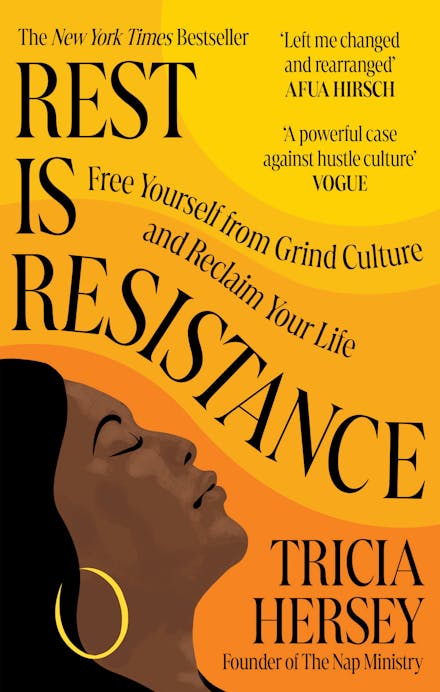
Rest as Resistance: Reclaiming the Lost Art of Being (Inspired by Tricia Hersey)
One of the most intimate discoveries of the detox was how radical rest felt. Not the curated, self-care version of rest, but simple, unadorned rest. Doing nothing. Being still. Letting time flow without trying to optimize it. Without the constant twitch of reacting to every notification, I realized how compulsively I had been reaching for stimulation. Price’s (2025) comparison came to mind, of how we can become “like lab rats, constantly pressing the lever to get food” (p. 25). I realized I had been pressing that lever all day, every day, without even knowing it.
At first, the stillness was suffocating. But eventually, it expanded. Things I usually overlook became anchors. Rest started to feel like defiance. In a culture that monetizes every idle moment and teaches us to measure our worth by our productivity, simply being felt like an act of rebellion. Leisure did not feel like laziness, but as a way of reclaiming my time, my attention, and my internal world from the forces constantly trying to colonize them.
What Stays With Me
The detox didn’t turn me into a digital minimalist overnight. But it changed my awareness. Now I see the tiny compulsions, the micro-escapes, the emotional shortcuts my devices offer, and how often I take them.
I want more moments like the ones I experienced during the detox: slow, present, and grounded. More conversations without screens. More journaling without distraction. More resting without guilt. I want to remember what it feels like to be a person who exists outside the endless scroll. Who exists outside the doing.
The day showed me a version of myself I’d been missing. The version who feels deeply, listens carefully, and isn’t constantly sprinting away from her own mind.
My 24-hour digital detox wasn’t just a break from technology. It was a brief return to myself. A reminder that solitude is not something to fear. That stillness is not a void. That the parts of me I try to mute through constant stimulation are actually the parts that need the most attention. Stepping offline didn’t make me less connected. It made me more human. And that, I think, is the real point. Not to escape the digital world entirely, but to remember that there is a world inside me worthy of attention, too.
References
Newport, C. (2019). Digital Minimalism: Choosing a Focused Life in a Noisy World. Penguin.
Popova, M. (2017, March 4). Leisure, the Basis of Culture: an obscure German philosopher’s timely 1948 manifesto for reclaiming our human dignity in a culture of workaholism. The Marginalian. https://www.themarginalian.org/2015/08/10/leisure-the-basis-of-culture-josef-pieper/
Price, C. (2025). How to Break Up with Your Phone, Revised Edition: The 30-Day Digital Detox Plan. Random House.
Vialle, S. J., Machin, T., & Abel, S. (2023). Better than scrolling: Digital detox in the search for the ideal self. Psychology of Popular Media, 13(4), 687–695. https://doi.org/10.1037/ppm0000496